What Drives the Cost of a Corporate Website
Two proposals for the same corporate website can be far apart. The difference sits in scope, integrations, languages, security, governance and how many people approve each stage. Here is what drives the cost, so you can read a proposal and build the business case internally.
A corporate website is no longer a brochure. For an established brand it is the place where customers, investors, job applicants, journalists and regulators all form a view of the organisation, often before anyone from the company has spoken to them. Websites have moved well beyond information transfer: they now tell the brand story, capture and route leads, sell products, publish disclosures and feed data to the CRM.
That is why two proposals for what looks like the same corporate site can be far apart, and why a marketing lead often has to explain the difference to management and procurement. The gap is rarely about the visual design alone. It sits in integrations, governance, security, languages and the number of people who need to approve each stage.
In this article, we break down the factors that drive the cost of a corporate website, so you can read a proposal with the right questions and build the business case internally.
1. Website Type and Scope

The first driver is what kind of site you are building and how many unique page types it needs. Page count matters less than people expect. Forty pages built from five templates take less work than ten pages that each need their own layout and logic.
Corporate projects usually fall into three kinds. A landing page or campaign microsite is a single-purpose site, generally built for a launch or marketing campaign with one call to action. It is the lightest build, but in a large organisation it still has to follow brand guidelines, consent rules and analytics standards.
A corporate website covers the group story, products or services, investor relations, sustainability reporting, newsroom and careers. Scope grows with each audience it serves and each business unit that wants its own section. A group with several brands may also need a shared design system so that every sub-site looks related without being identical. Sector shapes the brief too: a consumer brand needs richer visual storytelling, while a financial services group needs disclosure pages, rate tables and compliance review built into the publishing flow.
An e-commerce site adds product data, a payment gateway, order processing and shipping logistics, and connects to inventory and fulfilment systems. Because it handles customers' personal and payment information, its security and data handling need to be treated as a core requirement from the first workshop.
2. Domain, Hosting and Infrastructure
Most established brands already own their primary domain. The cost driver is everything around it: campaign domains, country domains, redirects from legacy sites, and making sure every domain is registered in the company's name rather than an agency's or a former employee's.
Domain refers to the name of your website. For instance, CUBEevo's domain is cubeevo.com. Registration itself is a small, predictable line item (Upwork explains what affects domain pricing). The larger task in a corporate setting is governance: who holds the registrar login, who approves DNS changes, and how renewals are tracked so a campaign domain does not lapse in the middle of a launch.
Hosting is where your website lives. A site built on Webflow or a similar platform includes hosting in its subscription. A custom build needs a hosting environment that meets your IT team's policies on data location, uptime, backups and access control, and often separate staging and production environments. The hosting decision should involve IT early, because a late security review can move a launch date by weeks.
3. Content
Content is the line item most often underestimated in corporate website projects, and the most common cause of delay. In-house teams can write their own copy, but the question is whether it reads consistently in the brand's voice across every section, and whether it has been structured for search and for the questions customers actually ask.
Languages multiply the work. A site in English, Bahasa Malaysia and Chinese needs translation or transcreation, separate review by native speakers, and layouts tested for each script's line lengths. Each language also adds a review cycle with the people who own that market.
Approvals are the other multiplier. Product claims may need legal review, financial figures may need sign-off from investor relations, and leadership profiles need each person's approval. Photography and video add their own scope: a professional shoot across several locations, usage rights for talent, and an asset library the team can reuse after launch. A proposal should state clearly who writes, who shoots, who translates and who approves.
4. Custom Design
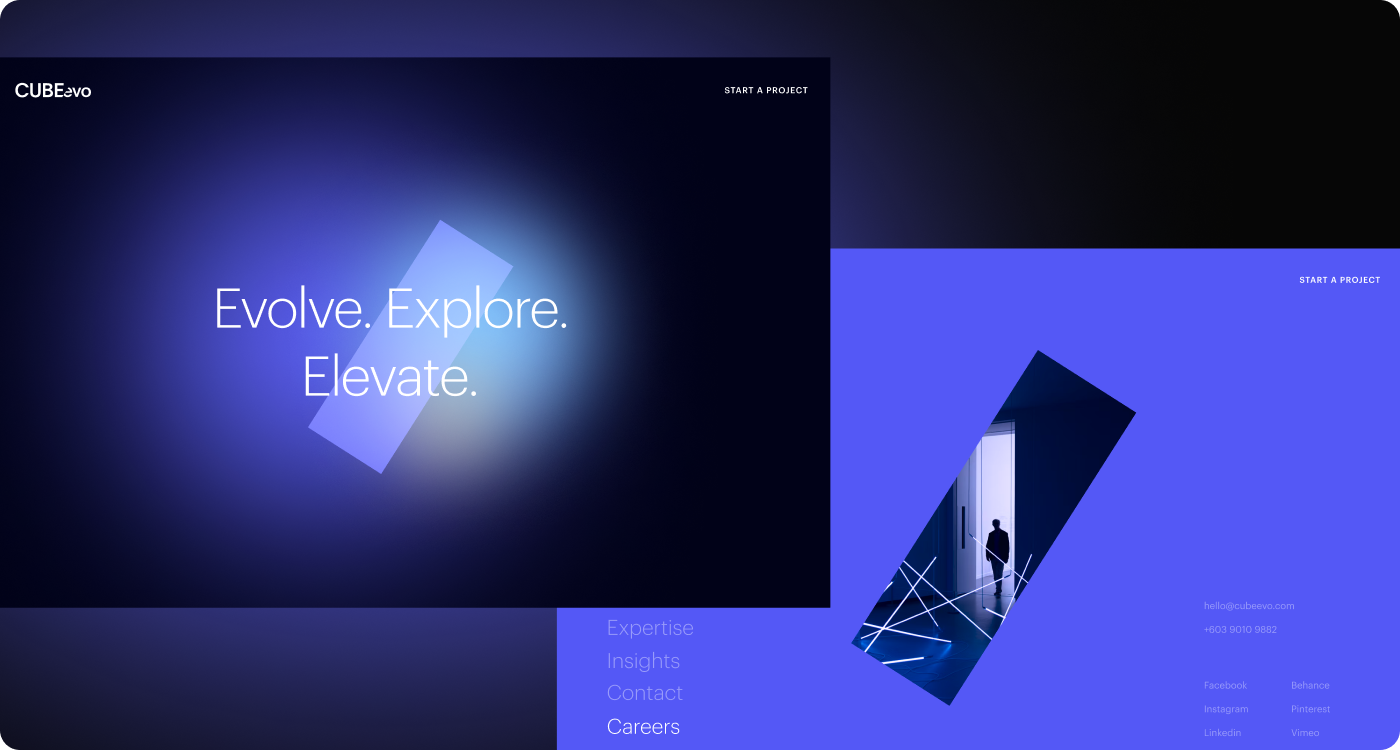
Custom design is often the most visible cost driver. A template can be adapted to your logo and colours, but you are limited by its frame and layout, and the result tends to look like other sites using the same template. For an established brand with detailed guidelines, a template usually forces compromises that the brand team will notice and management will question.
A custom design starts from your brand strategy and guidelines and turns them into a web design system: typography scales, colour use, components, motion and imagery rules that every future page can follow. That system is what keeps a site consistent when several teams, agencies and markets publish to it over the following years. Like designing a building, it involves discovery, user research, planning and several rounds of review before anything is built.
User experience research belongs here too: understanding how customers, investors and applicants use the site, and which journeys matter most to the business. Interaction techniques such as parallax scrolling, scrollytelling and interactive elements can support the story, but each one adds design and testing time. If you want to see where these techniques are heading, read our blog on 16 Popular Web Design Trends to Lookout for in 2023.
5. Functionality and Integrations
A site that looks right but does not work properly damages the brand faster than an ordinary-looking one. In corporate projects, functionality is where scope grows fastest, because the website has to talk to systems other teams already run.
Functionality covers how easily visitors find what they need and complete a task, and how the site connects to the rest of the organisation. Typical integrations include CRM and marketing automation for leads, an applicant tracking system for careers, a product information system or ERP for catalogue data, search, analytics and consent management, and single sign-on for staff or partner areas.
Each integration needs access from the system owner, a test environment, data mapping and a security review, so each one adds time and cost. Other common features such as booking systems, store locators, multilingual switching, membership areas, live chat and event registration should be listed explicitly in the brief. The fastest way to control cost is to rank them: what must be live at launch, and what can follow in a later phase.
6. Development

Behind the interface sits the development work: the code, the content management system and the way content is modelled so editors can publish without breaking layouts.
The difference between development teams shows up after launch rather than in the proposal. A well-built site follows coding standards, separates staging from production, passes accessibility and browser testing, and gives your editors a CMS with roles and approval steps that match your organisation. A poorly built one may launch on time and then cost more in fixes, outages and rework, or force a rebuild within two years. When comparing proposals, ask how the site will be tested, who signs off each environment and what documentation your team receives at handover.
7. Optimization
Visitors leave slow pages, and on a corporate site those visitors include customers, analysts and candidates. Performance work, such as image handling, caching and limiting third-party scripts, should be scoped and measured against agreed targets rather than assumed.
Search engine optimisation is the second part. It covers keyword research, content structure, technical setup, title tags and meta descriptions, and, when you are replacing an existing site, a redirect plan so the rankings you already hold are not lost. For a multi-language site, each language version needs its own search setup.
Responsive design is the third. Most visitors arrive on a phone, so every template has to be designed and tested for mobile and tablet from the start, not adapted at the end. Each of these three areas adds measurable scope, and a proposal should say how they will be tested before launch.
8. Security
For an established brand, a website breach is a reputational event as well as a technical one. Customer data can be exposed, the site can be defaced or taken offline, and search engines may flag it as unsafe. Any site with forms, logins or checkout collects personal data, so the Personal Data Protection Act applies and your data protection officer will want to see how that data is handled. Security scope typically includes hardening, access control, regular patching, monitoring and, for larger sites, penetration testing before launch. Recovering from an incident costs far more than securing the site in the first place, so this is the last area to cut.
9. Maintenance
A website is never a one-off deal. It is an asset that needs continuous care: backups, security updates, troubleshooting, content changes and small improvements as the business evolves. For a corporate site, this is usually agreed as a service level, with defined response times and a named team, rather than handled ad hoc. Plan the maintenance arrangement alongside the build, because it shapes the total cost of ownership more than any single design decision.
In short, judge a website proposal against the role the site plays for the organisation. What first impression does it give customers, investors and candidates? Can your teams publish to it without waiting for a developer? Will it still fit the brand in three years?
If you are preparing a business case for a new corporate site, start with a discovery phase with a professional web design agency. Discovery turns these drivers into a written scope: page types, integrations, languages, stakeholders and approval rounds, and a realistic timeline. CUBEevo has worked with brands such as RHB, Ajinomoto and NTT Data, and quotes each website against a scoped brief so your management and procurement can see exactly what they are approving.