Why You Need a Brand Guideline for a Successful Business
Once several agencies, regional teams and franchisees are producing material for the same brand, it quickly loses clarity, consistency and impact. A Brand Guideline is the document that holds it together: what it contains, and why brand teams use it as a governance tool.
Branding is one of the most critical aspects of any business, yet once several agencies, regional teams and franchisees are producing material for the same business, the brand quickly loses clarity, consistency and impact. The document that holds it together is the Brand Guideline: it unifies the branding elements and the people and partners who build the brand.
In this article, we will dive into the definition of a Brand Guideline and why you need one for a successful brand.
What is a Brand Guideline?
A Brand Guideline, also known as a Style Guide or Rule Book, is a set of standard rules, tools and guides that help inform the marketing department or employees on the brand elements’ usage. Designers, writers and marketers can use it to create coherent branding and marketing collaterals.
It is an essential branding and marketing document that communicates the brand identity, personality and purpose to the employees to better comprehend and present the brand image in an appropriate way. Likewise, it also helps guide them in building employers’ branding. While a comprehensive Brand Guideline commonly outlines crucial branding information from Mission Statement to Brand Essence Wheel, sometimes a simple one only includes a Visual and Verbal Guide. A typical Visual & Verbal Guide contains the logo and its usage, colour palette, typography or font, imagery, brand tone and voice.
i. Logo
For every brand, the logo is undeniable the most crucial element. It is the main element that fosters brand recognition and familiarity for the consumers. Therefore, your Logo Guideline should comprehensively cover the colour variations, format, usage and more.
- Colour Variation: This should include the original full colour, black & white version as well as the usage.
- Logo Formats: This could mean the logomark, logotype and icon. Or it could also refer to the digital and print versions of the logo.
- Logo Usage: Referring to the guidelines on using the company logo on different kinds of backgrounds (plain or patterned) and media platforms (social media or website).
- Logo Localization: This refers to how to localize your logo for a different market which may include the languages and alignments.
- Dos / Don’ts: The specific rules of using the logo such as instructions on the minimum or maximum size and the alignment of the logo. Remember to include things to avoid to ensure the brand’s image and equity.
ii. Colour Palette
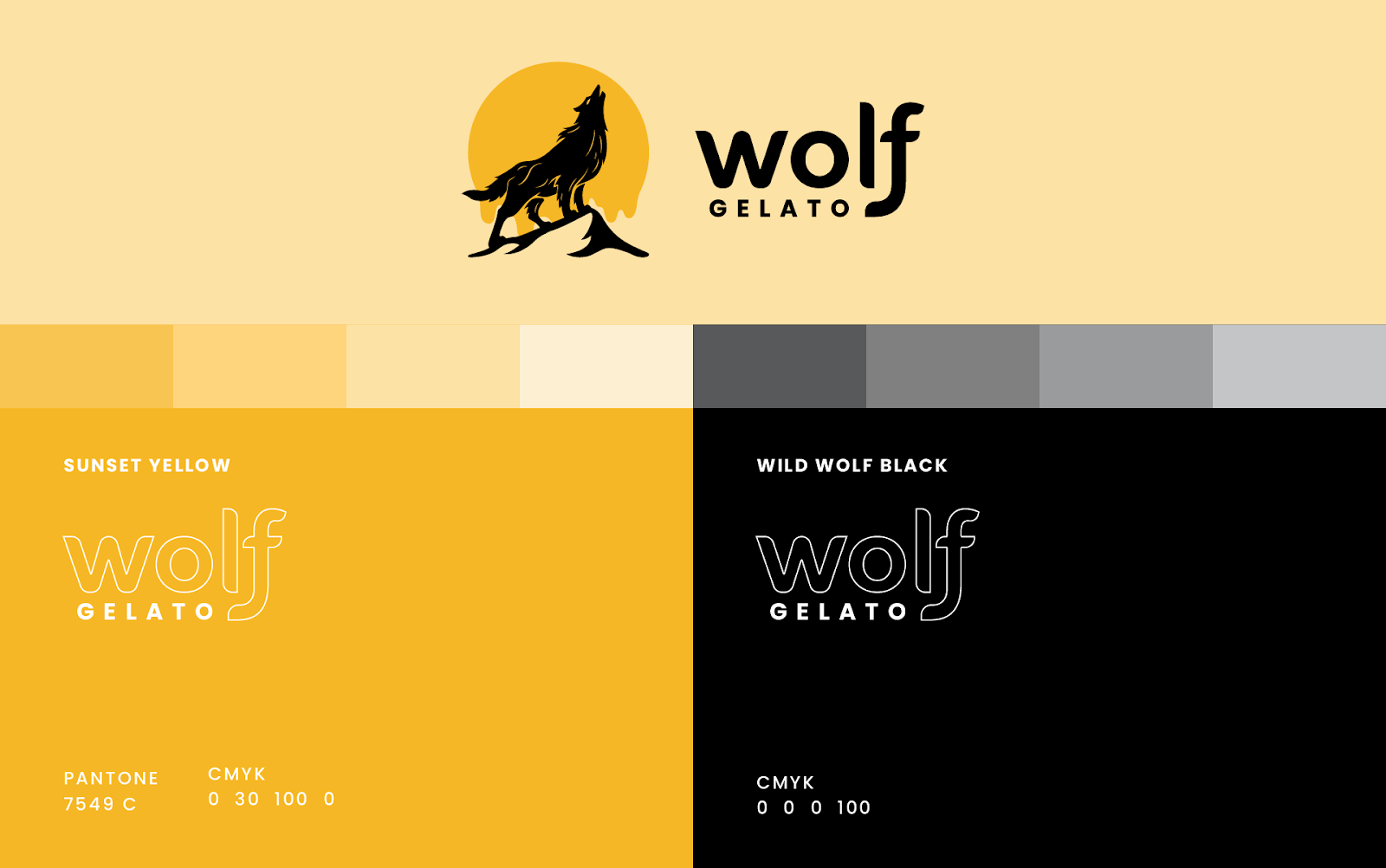
This is especially important for designers. Be sure to include primary, secondary and grayscale colour palettes as well as the colour codes like CMYK, HEX, and RGB.
iii. Typography / Font
This includes the typefaces or font family of the brand for internal and external communications. You should include the type of font used on headlines & body copies as well as the copy formatting preferences of the brand’s digital media.
iv. Imagery

This includes the branding guidelines on the usage of imageries such as illustrations, pictures, graphic designs, elements and icons. Depending on the services or products provided by your company, you could categorize the images into various categories. For instance, CUBEevo categorizes its icons in terms of the services they provide.
v. Brand Tone & Voice
In this section, the brand team should explain the brand personality and voice to employees and partner agencies. This includes the tone and manner of the brand such as fun & quirky or formal & sincere.
Why is a Brand Guideline important?
1. To Ensure Brand Consistency
One of the main reason consumers could recognize a brand is because of brand consistency. Without having to limit creativity, Brand Guideline is there to provide suitable and particular rules to ensure that the brand is coherent across various platforms such as social media, websites or packaging.
Moreover, consistency also holds the power to cultivate brand recognition and a strong brand identity for the consumers. Take Nike for an example, the Swoosh has become so iconic that the logo word ‘Nike’ isn’t necessary for recognition. The Swoosh is a versatile branding icon that presents a great example of brand consistency as it is used widely across all Nike’s products, digital platforms as well as marketing collaterals. With a strong brand identity, Nike is also able to avoid confusion with its industry peers.
2. To Maintain a Professional Image
Your brand is the first touchpoint between your customers and company. Whether you want to present your brand as fun & friendly or serious & authority, having a complete Brand Guideline is able to help maintain a professional image to your audience. This is because a Brand Guideline is able to guide your employees and designers on the appropriate ways to represent your brand.
Let’s be honest. Having mismatched brand taglines, logos or brand voice across all the platforms not only looks bad but also causes consumers to get confused and hesitant to use your products or services. Brand confusion creates frustrations and bad perceptions toward consumers. In turn, they might opt for other brands that they are more familiar with instead.
3. To Aid Your Employees
Not only that, but your team and your agencies will thank you for an extensive Brand Guideline. As a tool, it could help direct your design and marketing effort in the right direction without having to go over a trial and error way.
When you have a Brand Guideline in hand, your team will be able to quickly narrow down all the ideas and concepts to produce adequate solution. The workflow will be more efficient and productive as you will be able to save time on the brainstorming and decision-making process.
In fact, it could also take the burden off your Branding or Marketing manager’s shoulders. Your newly recruit interns or executives would be able to refer to the guideline instead of constantly relying on their managers. Having an accessible guideline also matters when branding and marketing work is spread across partner agencies, regional offices or franchisees, because each of them will use your brand elements in the same way and create a consistent experience for your customers. In that sense the guideline is a governance tool as much as a design document: it is what the brand team points to when approving or rejecting work.
In conclusion, having a detailed Brand Guideline could largely benefit your brand. Now that you have learned the importance of having one, it is important to find a suitable and professional branding agency to help create a comprehensive and complete Brand Guideline for you and your team.